I first heard Australian musician Chris Abrahams back in 2001 on Aether, the resplendent, endless sunrise of an album he recorded with his legendary band, The Necks. I listened to it obsessively and have been a fan ever since, but recently began exploring Abrahams’ solo work. His latest, Follower, released at the end of 2022 on the prodigious Room40 label, has become my new obsession.
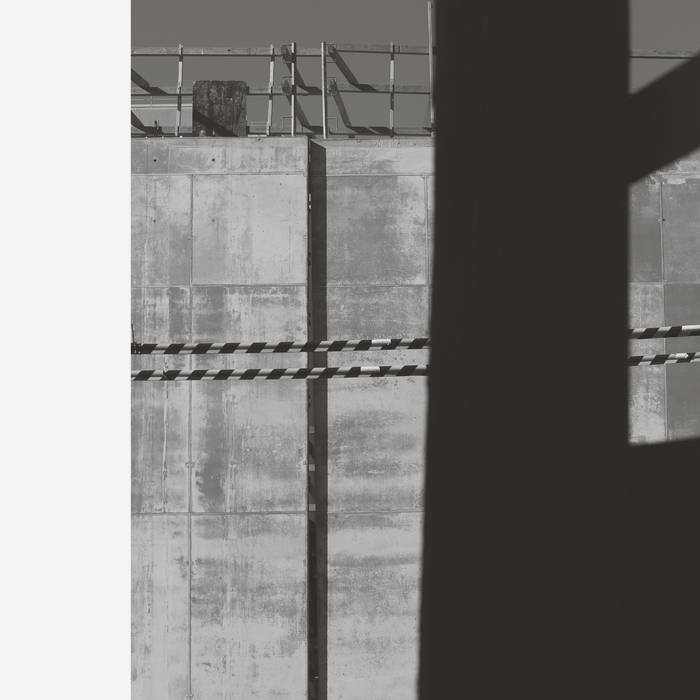
“Costume” opens on a rolling fog-bed of eerie organ over which Abrahams slowly layers his materials. Bells ring, but their sound is almost coincidental, as if someone were idly lifting them and looking them over while thinking about something else. Piano drops in tentatively, an approach that feels mournful and ruminative. Abrahams gently recycles a handful of notes in a tight range, laying them down in shifting patterns. Electric keys emerge and swell, holding a chord. The track, the longest on the album, coheres as it progresses yet never accumulates or assumes a shape. From the depths of this conjecturing atmosphere, a harsh, distorted swell emerges, proceeding in billows. It takes over the soundscape and envelops it in a corrosive mist. Upper register notes on the piano re-emerge tentatively to clear the air – but the piece suddenly ends.
Abrahams’ piano playing on Follower is restrained, even minimal. It can sound at times as if he’s intentionally limited the number of notes he’s allowed himself to work with, and is trying different combinations of the same six or seven notes to decipher a code. As a result, the emphasis falls less on his melodies – though he wrings many colors and moods from such constrictions – and more on his rhythms and attack. To focus solely on his piano playing, however, is to miss the point as Abrahams brings a continually surprising array of percussive textures to these tracks as well.
“New Kind of Border,” starts quietly and is quickly ignited by Abrahams’ insistent style and trim keyboard runs. But while he plays, the track rattles and jangles and crackles in a hectic welter that continually threatens to overtake and disrupt the proceedings. With Abrahams’ intuitive sensitivity to what works, everything thrashes together with steady, palpable tension. The piece effectively resolves itself with a soothing, repeated three-note gesture.
“Sleep Sees Her Opportunity” offers up a rangy, mesmerizing environment, struck through with muted, atonal sprays of piano: frosty, one-handed runs that splinter into fragments in their flight and that put me in mind of the chillingly spectral prepared piano from the second movement of Arvo Pärt’s “Tabula Rasa.” A submerged but steady thud like a panicked heartbeat drives the track forward through bursts of shivering, chattering static, yet the overall mood remains one of mystery rather than dread.
The final track, “Glassy Tenseness Of Evening,” starts with what sounds like a stubborn car engine that won’t turn over. Soon enough, echo-drenched knocks and odd rumbles and throbs burst in, adding a previously unheard, cavernous dimension to the album, followed by Abrahams’ gentle, confined keyboard motifs. As the track progresses to its end, the engine sound recedes and is replaced by a heavily muffled throb, keeping the tension on high while the piano dreams its cyclical dreams.
In my many listens to this album, I keep coming back to its title, Follower. Follower of what, exactly? Abrahams seems to me to be in egoless pursuit of his own voice. He’s not interested in virtuosic display, something he could readily fall back on, so much as in making a space in which the fusion of contrasting sounds can emerge and express something new and uncanny. With this album, I think he succeeds brilliantly.
 Another Green Kitchen