To experience fear is, in some ways, to be returned to a childlike state, to a position of powerlessness and vulnerability. In this condition, the normal terms of engagement with one’s accustomed environment are hidden or missing altogether. The terrain, psychic or real, turns threatening, and unfamiliar, unforseen aspects of one’s personality can sometimes emerge. A ruthless, cunning aggressor takes charge of one’s personality, or one becomes a weakened, helpless victim. The change is sudden, overwhelming and total in its affect.
Explorers are unusual in that they tend to seek out this terrain, to challenge themselves by testing the limits of their endurance and resourcefulness and, along the way, stare back at their own fears, and all in the name of science. But for every Admiral Byrd that has succeeded, there have been dozens more that did not. Conditions turned lethal, materials failed, time and money ran out. Bad luck caught up with them and killed them.
Varde, from Norwegian artist Elegi (otherwise known as Tommy Jansen) on Erik K. Skodvin‘s Miasmah label, pays homage to polar exploration, while also exploring the territory of fear itself.
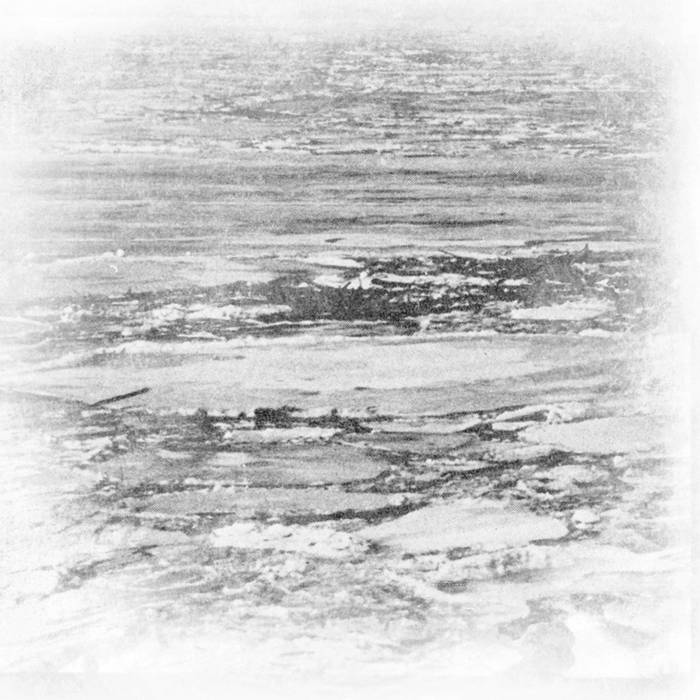
Jansen has imagined a trip across a wasted tundra and manufactured a sonic interpretation of what it may have been like for the explorers who ventured forward and never returned. The evocation, despite the compelling deployment of recognizable noises, is of an emotional or psychic landscape, as much as an actual polar one. The sounds of a shovel weakly scraping against something hard and unyielding, later replicated in a bow scraping the coiled surface of a taut string, until it warms and opens into a lament. Slow, string-filled surges crest and recede, renew their drives only to fall back again, buttressed by chthonic, bass-heavy rumblings. Untethered voices pass, muttering to no one. Fractured melodic lines cut into and interrupt themselves and then disappear altogether. Tolling notes from a piano’s lower register protrude from the gloomy morass of sound like steps leading downward to an unseen floor. Sled dogs are heard howling and whimpering. Taken together, these all suggest a larger failure, a doomed effort — the futility of struggle against unstoppable forces.
This is ambient music, but where ambient music once suggested peaceful, idealized zones that reflected internalized, utopian (read “drug-induced”) states of being, this new strain (which is called, without a trace of irony, “acoustic doom”) demarks a drug-free zone, a sober, somber investigation into the darker, scarier thoughts just beneath our surfaces.
There is also an alluring sadness and intrigue to this music, a familiar emotional tug, particularly when individual instruments come to the fore. Jansen manages to conjure up notions of a post-human world, the dying out and disappearance of our race. It’s an exorcism of fear, a sonic realization of the last days, a svanesang or swan song, as the third track is called. With this unflinching disc, he has turned a part of his psyche inside out and captured it in musical form as it left its hiding place.


 Another Green Kitchen